Reception relief
Absorbs repetitive questions so staff can focus on exceptions, registrations, payments and sensitive cases.
 Sensity
Clinic & Hospital Robot Assistant
Sensity designs supervised robot assistants for reception, check-in, queue guidance, wayfinding, patient-care requests and hospital-only staff visibility — without replacing clinical judgement.
Concept
The robot acts as a digital front-of-house assistant: it greets, informs, guides, reminds and escalates to people when human help is needed. Clinical decisions remain with doctors and nurses.
Absorbs repetitive questions so staff can focus on exceptions, registrations, payments and sensitive cases.
QR or typed check-in, queue number and waiting-time guidance reduce crowding at the desk.
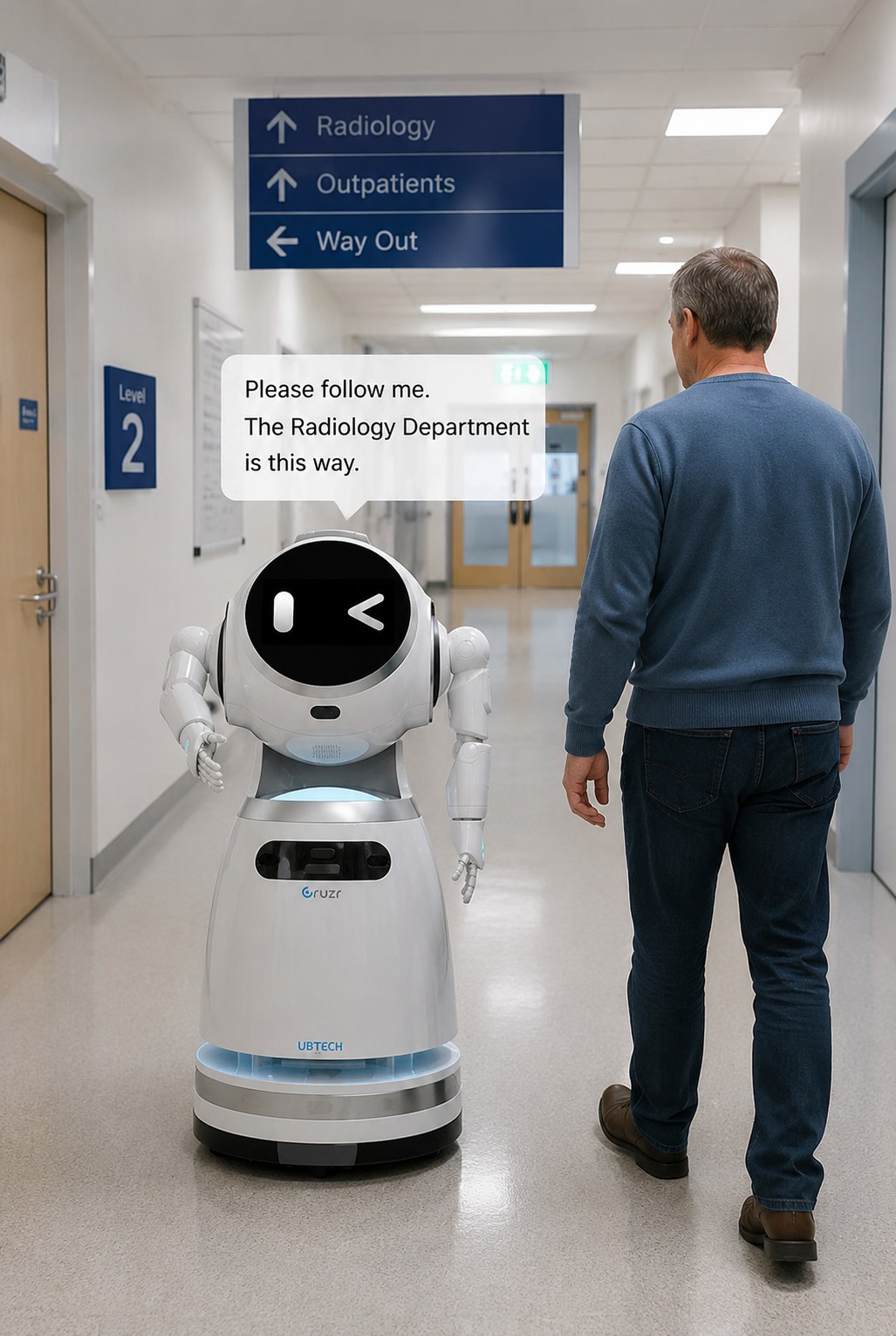
Directions to reception, imaging, laboratory, departments and waiting areas using screen and voice guidance.
“Call a person” is always visible. Urgent, unclear or sensitive interactions go to staff through controlled workflows.
Day-one experience
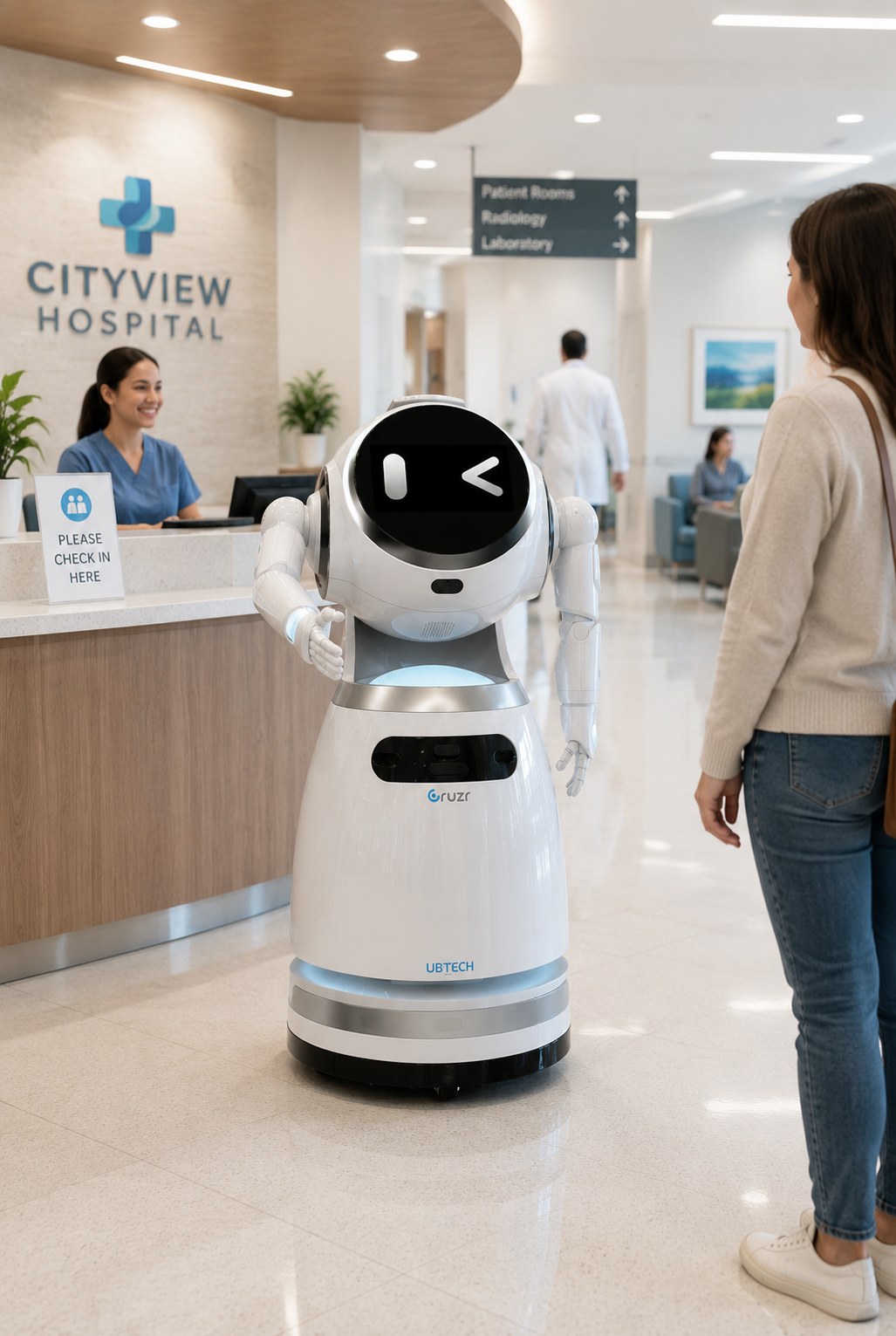
Patient journey
The robot coordinates the outpatient journey and improves handoffs. It does not diagnose, prescribe or decide care priorities independently.
Greeting, AI disclosure and urgent-help check before moving into normal check-in.
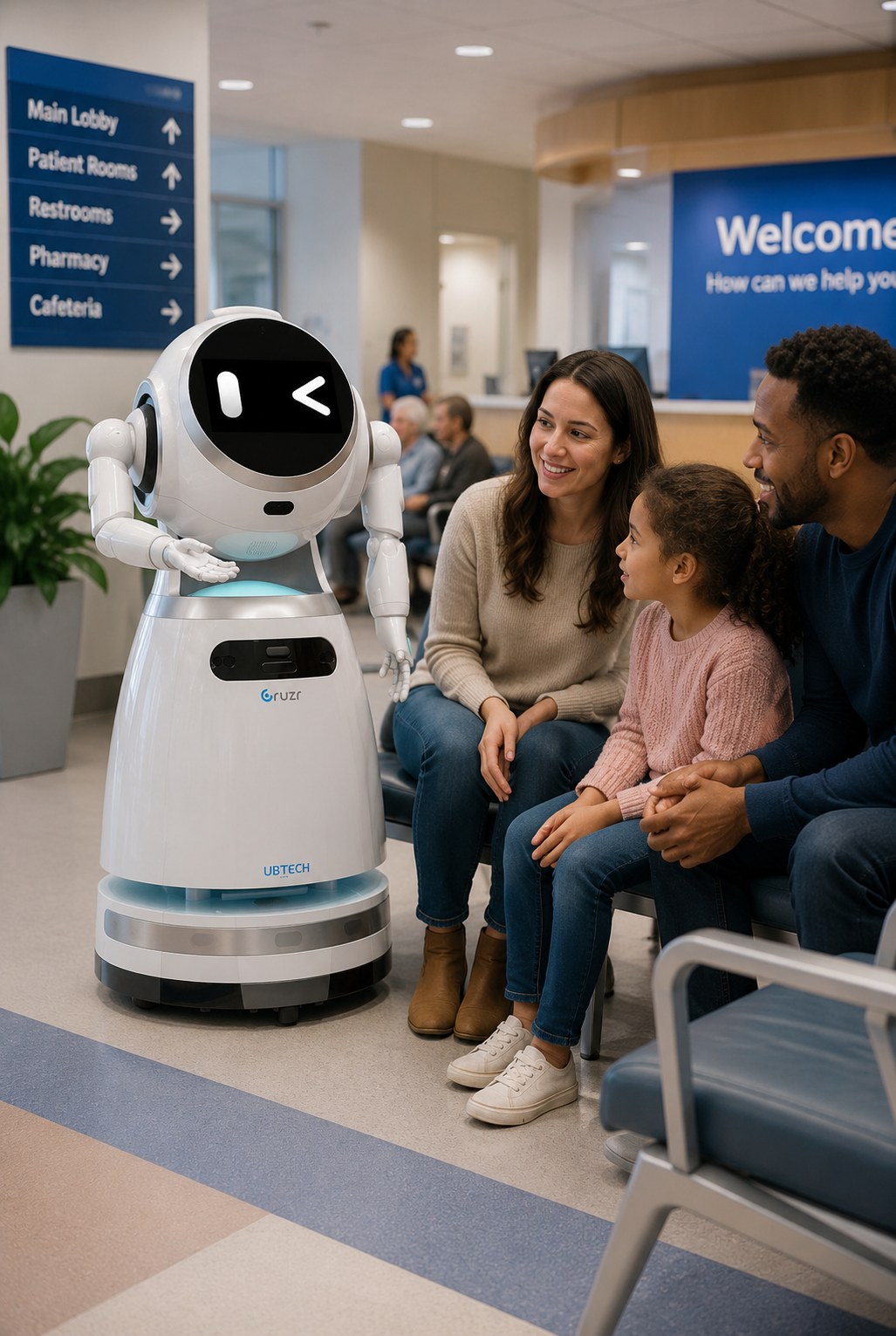
Appointment verification, queue number, waiting guidance, FAQs, child-friendly content and patient-care requests.
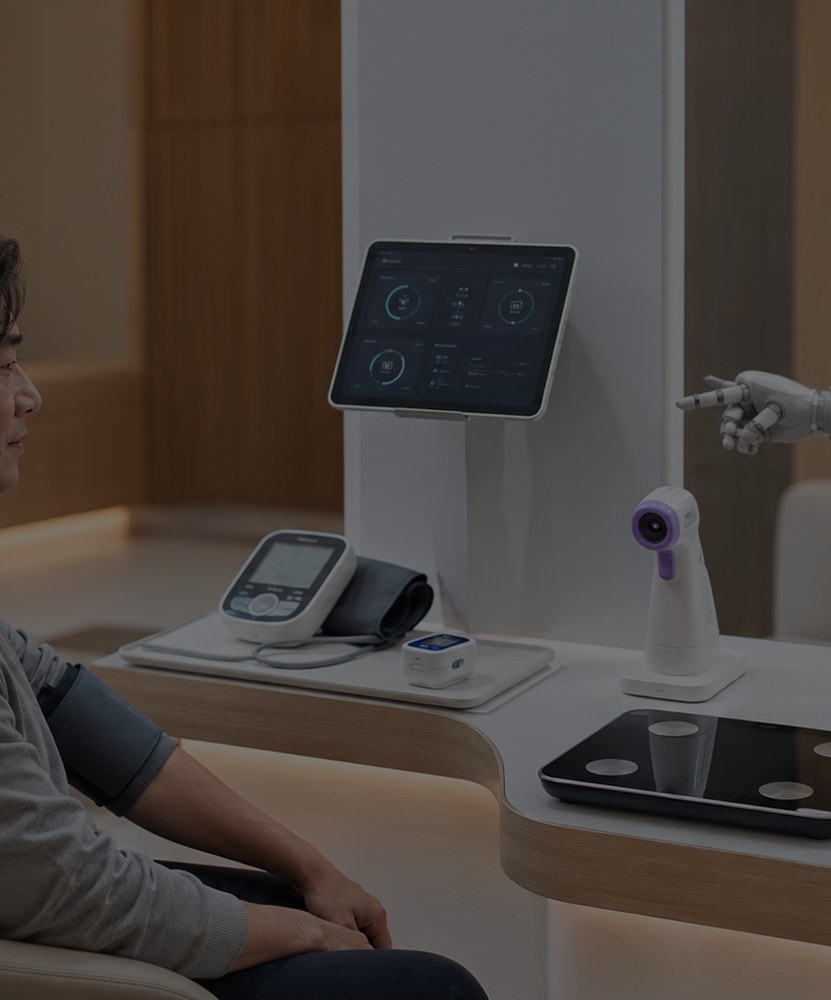
Structured intake, certified-device vitals and draft documentation summaries only after safety, privacy and compliance gates.
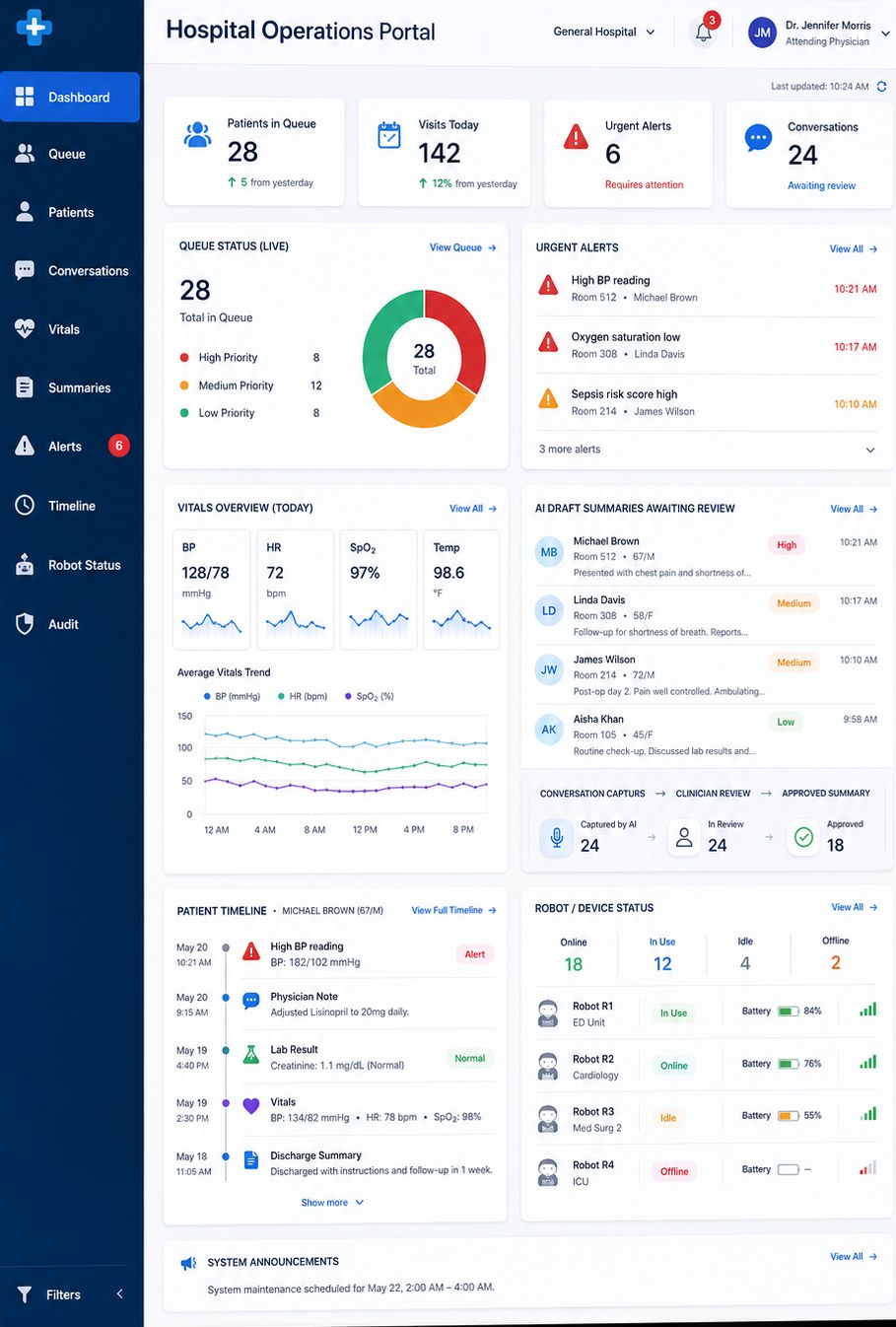
Hospital-only portal
The portal is not a patient portal in this phase. It gives hospital teams a controlled view of arrivals, queues, robot sessions, patient-care requests, staff alerts, approved summaries and operational analytics.
Conversation summaries + patient history
For clinics where patient history is mostly free-text notes, the system can later support consented capture and AI-assisted draft summaries. That feature must stay gated and clinician-controlled.

Rollout
Phases 1–2 deliver visible reception value. Capabilities that prioritize patients, raise vital-sign alerts, or summarize consultations switch on only after qualification gates are passed.
Privacy assessment, compliance checks, platform choice, site mapping, staff training and go/no-go recommendation.
Greeting, check-in, queue, wayfinding, FAQs, translation, feedback and staff escalation.
Waiting-room education, intake support, certified-device vitals, documentation validation, lab routing and monitoring.
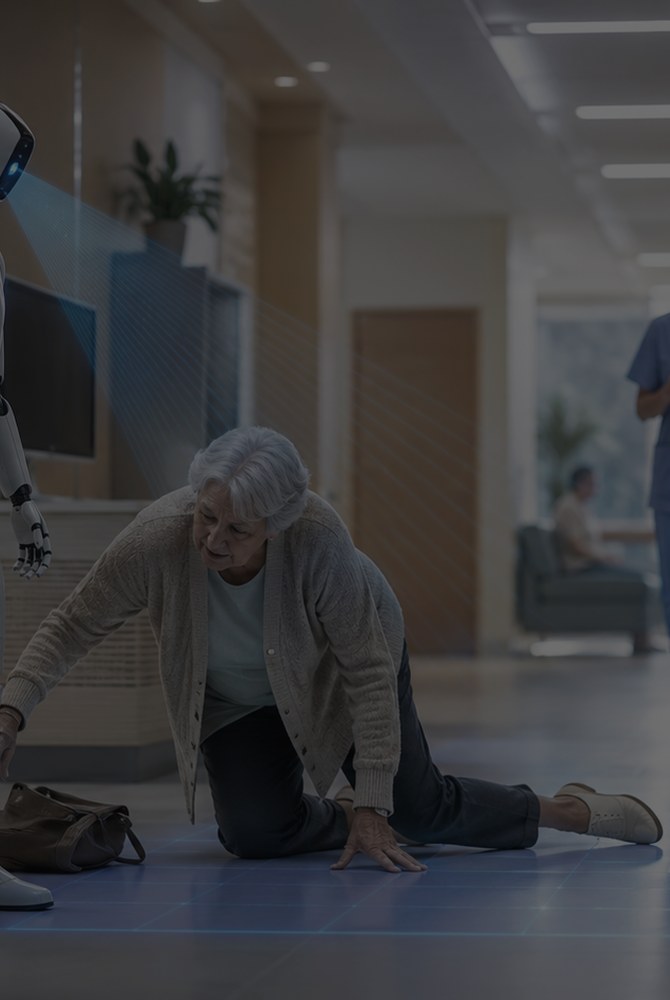
Trust model
Photos from the clinic concept
Reception, waiting rooms, corridors and staff dashboards can be combined into a supervised patient-flow experience.
Phase 0
Phase 0 produces the privacy assessment, regulatory confirmation, platform shortlist, firm pricing and pilot recommendation.